
Every week someone messages me the same question, usually after a Fiverr order went wrong: “Should I buy backlinks, and if yes, from where?” I have been building links for clients since 2019, and I have paid for placements more times than I can count. So here is the answer I give them, without the hedging you get on most of these guides.
Yes, you can buy backlinks and rank. Most sites at the top of competitive SERPs have paid for at least some of theirs. But the word “buy” covers everything from a $5 gig that will hurt you to a $600 editorial placement on a real publication, and the difference between those two is the whole game. This guide walks through what buying links actually means in 2026, what it costs, which methods I use, which ones I refuse, and the checklist I run before a single dollar leaves the account.
Most agencies sell this as a fixed bundle, so before you sign one, read my breakdown of link building packages and what each price tier really buys.
Should you buy backlinks? The short version
- Buying links is against Google’s link spam policy. It is also how most competitive niches work, and most of the people who tell you never to buy backlinks have bought a few themselves. Both things are true.
- A real link on a real site with real traffic costs $150 to $400 in most niches. Anything under $50 is either a network, a spam blog or a scam.
- The site matters more than the price. A DR 60 site with no organic traffic is worth less than a DR 30 site that ranks for 2,000 keywords.
- Never buy from marketplaces that list “DA 50 packages”. Buy from individual site owners, or from an agency that shows you the site before you pay.
- Paid links should look like the links a site would have earned anyway: relevant page, natural anchor, inside the content, on a site that also links out to other people.
What “buying backlinks” actually means in 2026
When people say they bought a backlink, they mean one of five very different things:
| What you paid for | What you actually got | My verdict |
|---|---|---|
| A Fiverr or Upwork “100 high DA backlinks” gig | Profile links, comment spam, expired-domain networks | Never |
| A PBN (private blog network) link | A link from a site that exists only to sell links | Never for a business you care about |
| A niche edit (link insertion) | Your link added to an existing article that already ranks | Yes, with vetting |
| A paid guest post | A new article, written by you or them, with your link, on their site | Yes, with vetting |
| Sponsored content or digital PR placement | A clearly labelled article on a publication, often nofollow or sponsored | Yes for brand, weaker for rankings |
The first two are what Google’s spam team is built to catch. The last three are what every serious link building campaign is made of, whether anyone calls them “paid” or not. A guest post where you spent four hours writing the article is a transaction too. Money just makes it faster.
What Google says, and what actually happens
Google’s link spam policy is clear on paper: if you buy backlinks that pass PageRank, or sell them, that is link spam. Paid links are supposed to carry rel="sponsored" or rel="nofollow". If Google finds paid dofollow links, the options are a manual action or, far more often, the links simply get ignored by the algorithm.
If you want the full rulebook on where Google draws that line, including how paid links get caught and the 10-point score I run on every seller, I wrote it up in my guide to paid backlinks.
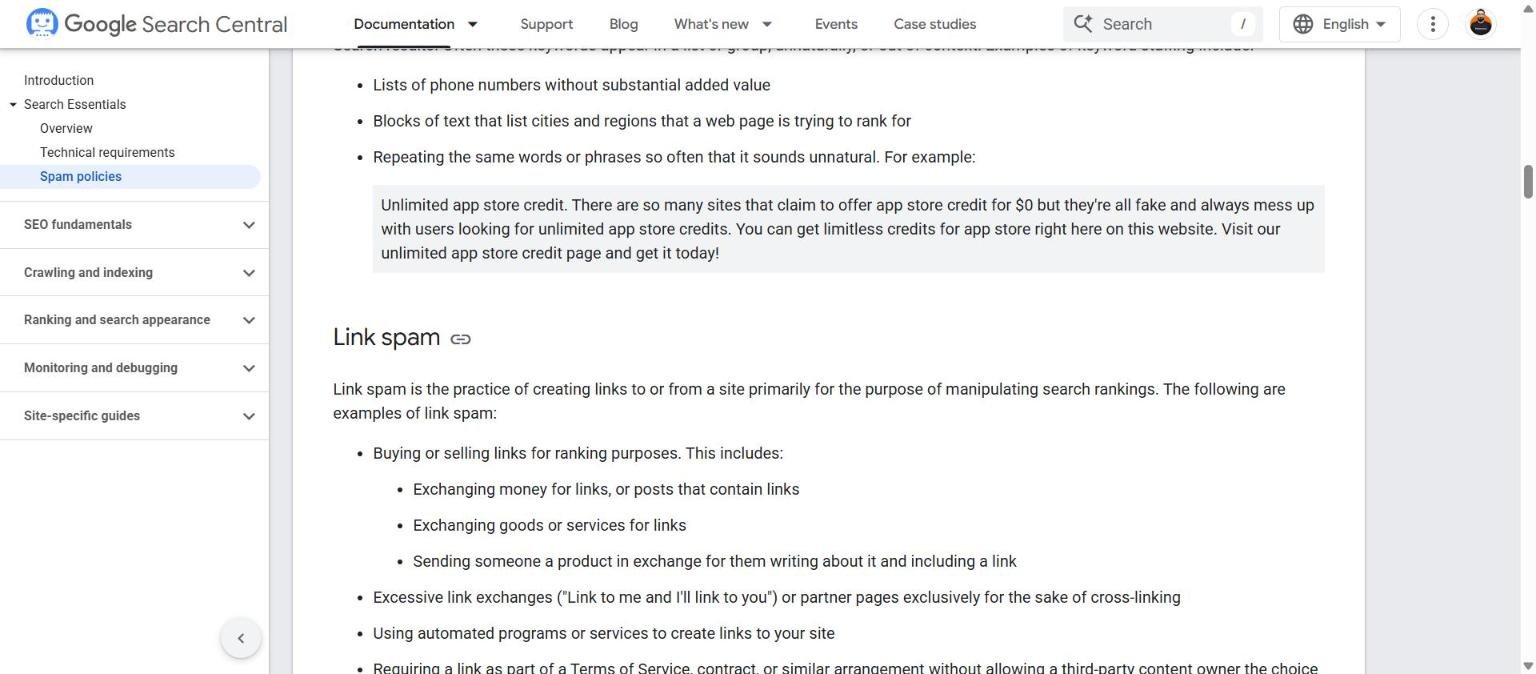
Here is what I have seen across roughly 60 client sites over six years: exactly one manual action for unnatural links, and that site had bought 400 links from a single network in three months. Every other case of “we bought links and nothing happened” was not a penalty. It was the links being worthless in the first place. Google’s SpamBrain is very good at recognising sites that exist to sell links, and it quietly zeroes them out. You do not get a notification; you just get no movement and a lighter wallet.
So the real risk when you buy backlinks in 2026 is not the penalty. It is spending $2,000 on links that count for nothing. That reframes the whole question: you are not trying to hide from Google, you are trying to buy links that Google would count if it found them, because they sit on sites that deserve to be linked from.
How much it costs to buy backlinks (real numbers)
These are prices I have paid or been quoted in the last twelve months, mostly in SaaS, finance, home services and health. Your niche will shift them; gambling and CBD run two to three times higher.
| Link type | Typical price per link | What moves the price |
|---|---|---|
| Fiverr bulk gig | $5 to $50 for “100 links” | Nothing. It is worthless at any price. |
| PBN link | $30 to $120 | Fake DR. Avoid. |
| Niche edit on a real blog (DR 30 to 50, 1k+ monthly visits) | $120 to $250 | Traffic, topical fit, how many links the page already has |
| Niche edit on a strong site (DR 50 to 70, 5k+ visits) | $250 to $450 | Same, plus whether it is a ranking page |
| Paid guest post, mid-tier blog | $150 to $350 (plus writing) | Whether they accept dofollow, word count they demand |
| Paid guest post, strong publication | $400 to $1,200 | Editorial standards, real readership |
| Sponsored article on a news site | $500 to $3,000 | Usually nofollow or sponsored; brand value more than SEO |
| Digital PR placement (earned, via a study or data) | $0 per link, $2,000 to $8,000 per campaign | Quality of the story; 15 to 60 links per good campaign |
An Ahrefs outreach study found site owners asked an average of $361.44 for a niche edit and $77.80 for a guest post fee, and my own invoices land between the two, at around $250 to $300 per link. If a seller quotes you far below that for a site that looks strong, the site is not what it looks like.
The six ways people buy backlinks, from worst to safest
Some vendors also sell a second layer of cheap links pointed at your paid placements. That is tiered link building, and in my audits it gets those placements deindexed more often than it helps them.
1. Freelance marketplace gigs (avoid)
Search “backlinks” on Fiverr and you will find thousands of gigs promising 50, 100 or 500 “high DA dofollow backlinks” for the price of a coffee. I ordered three of these on a test domain in 2024 to see what arrives. What arrived: forum profile pages, Web 2.0 blogs with one post each, comment links on abandoned WordPress sites, and a spreadsheet of “DA 90” URLs that were user profile pages on big sites. Not one link was inside real content on a real page. The domain’s rankings did not move up or down, which tells you Google ignored all of it.
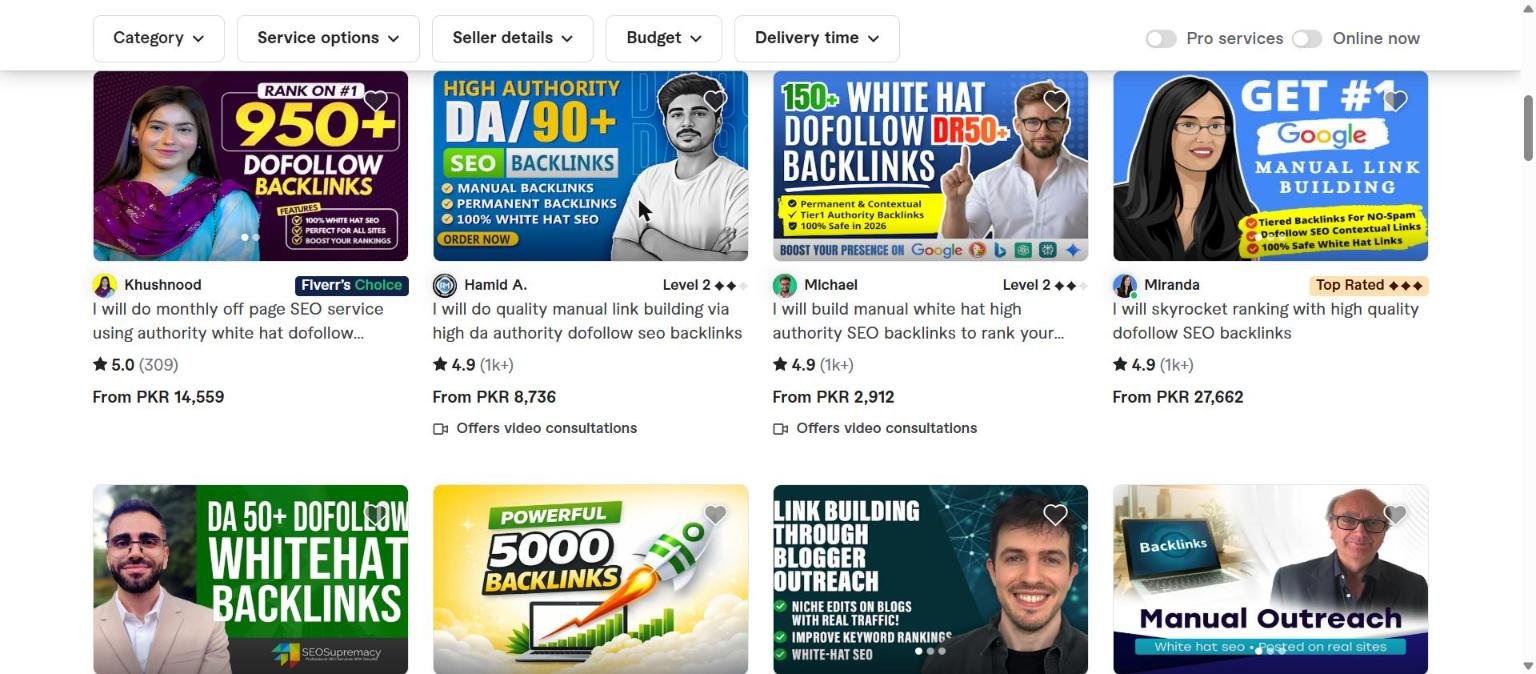
The tell is the packaging. Nobody who owns a site with real traffic sells links by the hundred. If a gig quotes a quantity instead of a site name, it is not a backlink service, it is a list-pasting service.
2. PBNs (avoid for any site you cannot afford to lose)
A private blog network is a set of expired domains with old authority, rebuilt with generic content, whose only purpose is to link out to paying customers. They still work in some low-competition niches for a few months, which is why people keep selling them. They also share footprints: same hosting patterns, same thin content, no organic traffic, links out to unrelated businesses. When one gets caught, the whole network goes, and every site it linked to gets a look. I have cleaned up two PBN disasters for clients. Both took longer to recover than it would have taken to build real links from scratch.
3. Link marketplaces (use with heavy filtering)
Platforms where site owners list their prices and you buy placements through a dashboard. The convenience is real and so is the problem: the inventory is a mix of genuine blogs and sites that were built to be listed on marketplaces. I use them occasionally, but only with the filters set to organic traffic above 1,000 a month and only after opening every site by hand. Roughly one in four listings passes.
4. Niche edits from individual site owners (my main method)
Find an article that already ranks and is relevant to your page, email the owner, and pay to have a sentence with your link added. The link sits inside indexed content that Google already trusts, it starts passing value within days, and you control the anchor text. Most of the backlinks I buy for clients are niche edits. The catch is the vetting: the article has to be genuinely relevant, the site has to have real traffic, and the page should not already have six other “sponsored” insertions in it. I cover the checklist below. If you want the mechanics of the ask itself, I wrote a full guide on link insertion.
5. Paid guest posts (good, slower)
Same vetting as niche edits, but you supply a full article. It costs more time, and the page starts with zero authority, so it takes longer to pass value. The upside is a page written around your topic, which is better for relevance and safer long term. If you go this route, write something you would be happy to see under your own name; a bad guest post on a good site is still a bad signal. My separate guide on guest posting covers pitching and content.
6. Sponsored content and digital PR (safest, different job)
Paying a publication for a labelled sponsored article is completely within Google’s rules because the link is marked sponsored. It builds brand and referral traffic, and it passes little or no PageRank. Digital PR, where you publish a study or data piece and pitch it to journalists, is the only method on this list that produces dofollow links from news sites at scale, and the money goes into the campaign rather than into individual links. It is the right choice for brands with a budget; it is overkill for a local plumber.
How to buy backlinks safely: my 9-point check before paying
Whenever I buy backlinks, I run the site through this list before I reply to the seller. It takes about four minutes with Ahrefs or Semrush, and about eight with the free tools.
- Organic traffic, not authority score. Minimum 1,000 monthly organic visits, and the traffic graph should be flat or rising. A DR 55 site with 80 visitors is a network.
- Ranking keywords make sense. Open the top keywords. A home improvement blog should rank for home improvement terms, not for “casino bonus” and “crypto”.
- Outbound link pattern. Read three recent posts. If every one has a suspiciously commercial link in the middle of paragraph four, the site is a link farm with a nice theme.
- Real authorship. Named authors with a history, an about page, a contact page. Anonymous “admin” posts on every article is a red flag.
- Content quality. Would you read it? Spun or obviously machine-generated filler means Google is already discounting the site.
- The specific page. For a niche edit, the target article should rank for something itself and be about your topic. A link from a page nobody visits is close to worthless.
- Backlink profile of the seller. If their own links are from the same kinds of networks, the authority is inherited spam.
- Indexation. Search
site:theirdomain.comand check that recent posts are indexed. Sites that have lost indexing are the cheapest ones on every marketplace, for a reason. - Price sanity. Compare the quote to the table above. A strong-looking site at a weak price is the biggest warning sign of all.
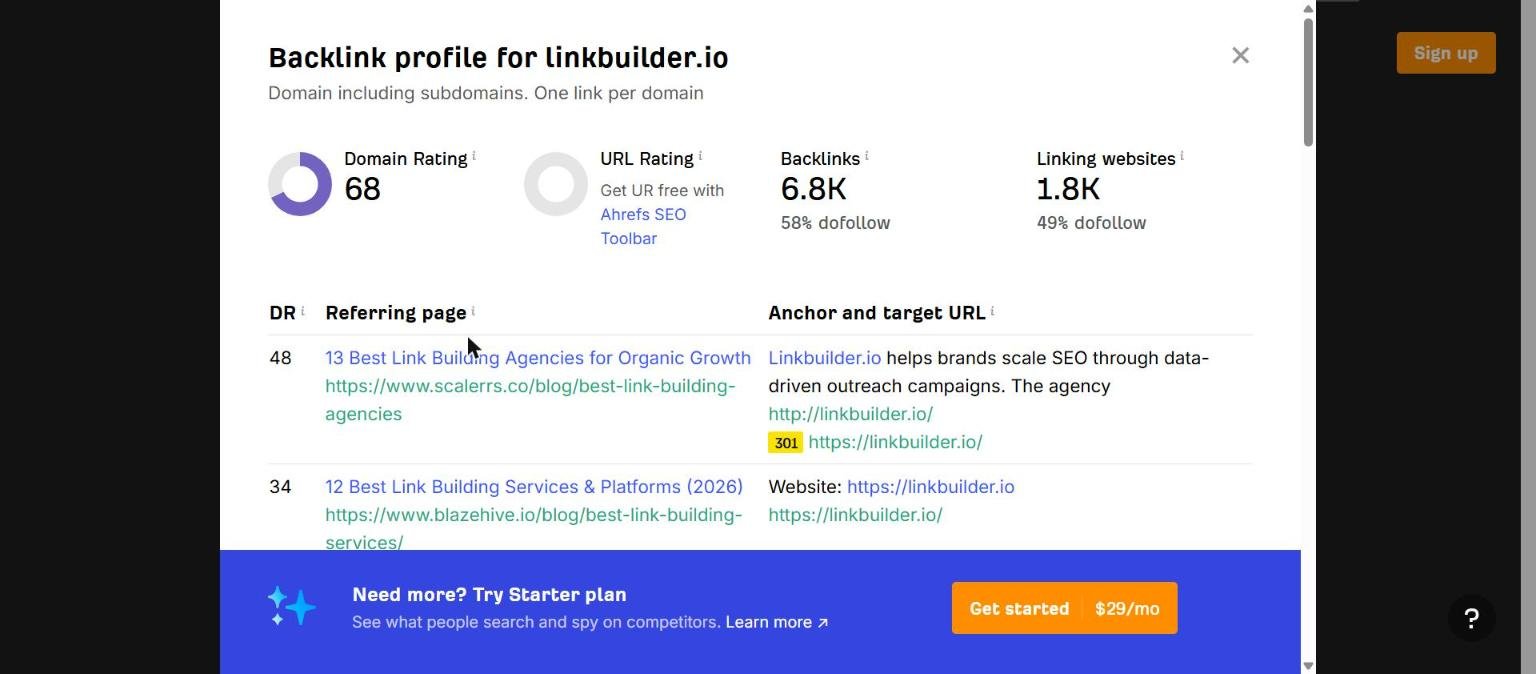
If you only have free tools, Ahrefs Webmaster Tools gives you your own site’s data, and the free Ahrefs backlink checker and Semrush checkers give you enough of a seller’s traffic, top keywords and backlinks to run points one, two and seven. The rest is just reading the site.
Anchor text, velocity and the rules that keep you safe
Sites that buy backlinks get in trouble far more often through the pattern than through any single link. Three habits fix most of it:
Before you send an order, decide how much exact match anchor text that page can take, because a single batch with one repeated phrase is what usually causes the damage.
If you have already bought links with keyword-heavy anchors, read my guide to fixing anchor text over optimization before you touch the disavow tool.
- Anchors: keep exact-match commercial anchors under 10 percent of your profile. Most of your paid links should use the brand name, the URL, or a natural phrase. If you sell CRM software, “best CRM software” as an anchor on five paid links in one month is a pattern any algorithm can see.
- Velocity: a site that earned three links a month for two years and suddenly gets forty in one month looks bought. Spread placements out. For a small site, four to eight quality links a month is plenty.
- Targets: point paid links at pages that deserve them, mostly guides and resources, with a minority to commercial pages. A homepage with 90 percent of all links is normal; a pricing page with 40 percent of them is not.
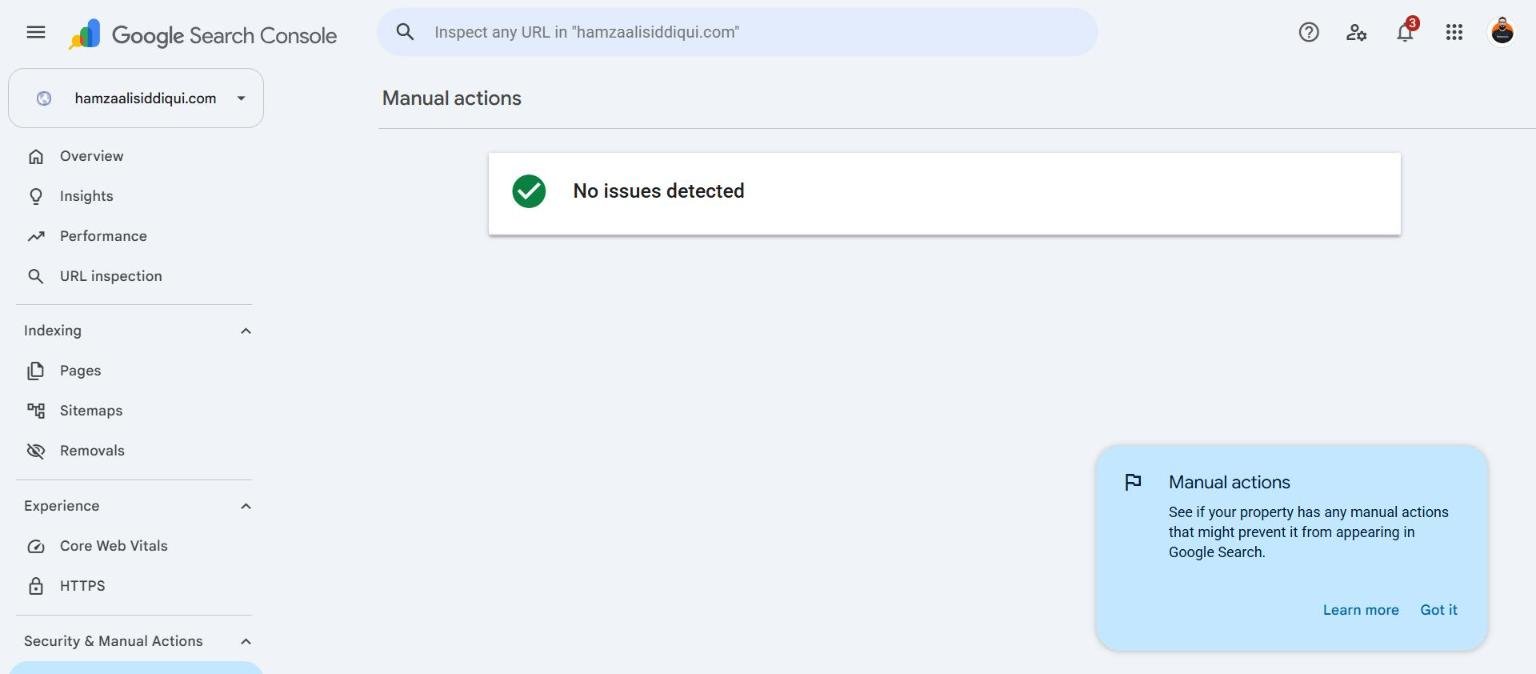
Check your own site every month in Search Console: the Links report shows what Google has counted, and the Manual actions page is where a real penalty would appear. Both are free, and they are the only opinions that matter.
What to put in writing with the seller
A surprising number of the backlinks you buy disappear within a year: the site gets sold, the owner strips “sponsored” links, or the article gets deleted in a content cull. Before paying, agree on:
- Permanent placement, or a stated minimum of 12 months, with a refund or replacement if the link is removed earlier.
- Dofollow, and whether it will be marked sponsored (which changes the price you should pay).
- Exact anchor text and target URL, in writing.
- Placement inside the article body, not in an author box, footer or “resources” list.
- No “sponsored post” label on a niche edit unless you are paying sponsored-content prices.
Then record every link in a sheet with the date, price, URL and anchor, and re-check the list every 90 days. I lose about 5 percent of purchased links a year even with agreements; without them it was closer to 15.
When you should not buy backlinks at all
Some honest cases where I tell people not to buy backlinks and to keep their money:
- The site has technical or content problems. Links amplify what is there. A slow site with thin pages does not need links, it needs fixing. Run the basics first; my internal linking guide is usually the cheaper win.
- You have not done a gap analysis. If you do not know which links your competitors have that you do not, you are guessing at targets. A backlink gap analysis takes an afternoon and tells you exactly which sites to approach.
- The budget only covers cheap links. Three $250 links beat thirty $25 links every time. If the budget is $300, buy one good link or spend it on reclaiming unlinked mentions, which is free.
- The niche is Google-sensitive. Health, finance and legal sites get looked at harder. Paid links there need to be near-perfect, or you are better off with digital PR.
How I buy backlinks for clients
For anyone wondering how I buy backlinks in practice: I start from a gap analysis, build a list of 40 to 60 relevant sites with real traffic, run the nine checks, and then negotiate directly with owners for niche edits and guest posts. Every site goes to the client for approval before payment. Every link is reported with the URL, anchor, price and the site’s traffic at the time, and re-verified after 90 days. Typical cost lands between $200 and $350 per link, and a small campaign is eight to twelve links a month. If you want that done for you, my link building services page explains the process and what you get.
If you do pay for a placement, verify it yourself; this guide covers how to check backlinks and confirm a link is live, indexed and dofollow.
Frequently asked questions about buying backlinks
Is buying backlinks illegal?
No. It is against Google’s guidelines, not the law. The consequence is a manual action or ignored links, not anything legal.
How much should I pay for a backlink?
$150 to $400 for a niche edit or guest post on a real site with real traffic. Under $50 is almost always a network or spam. Over $500 should be a genuine publication.
How long until purchased links affect rankings?
Niche edits on indexed pages usually show movement in four to eight weeks. Guest posts take longer, often two to three months, because the new page has to earn its own authority first.
Are dofollow paid links safe?
They are the ones Google’s policy targets, so the safety comes entirely from the site: relevant, trafficked, editorially run sites with natural anchors are rarely a problem. Networks and marketplace-built sites are the ones that get caught.
Can I get a penalty from links I bought years ago?
Rarely. Most old spam links are simply ignored. If you have a large batch from a known network, disavow the domains and move on; do not disavow individual good links out of caution.
Is it better to buy links or hire an agency?
If you have the time to vet sites and negotiate, it is cheaper per link to buy backlinks directly. An agency saves the time and, if it is a good one, brings existing relationships and better prices. What matters is that whoever does it shows you the site before you pay.