
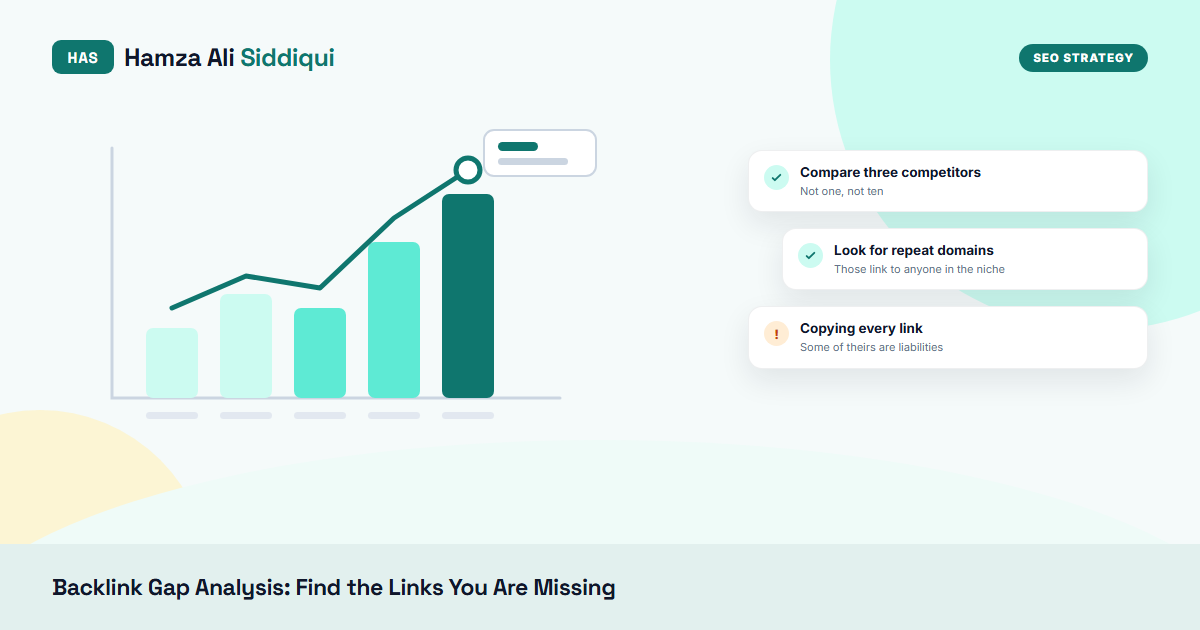
A backlink gap analysis answers one question: which websites link to your competitors but not to you? Those sites have already proven they will link to content like yours, in your niche, which makes them the warmest outreach list you will ever build. Instead of guessing where to get links, you let the pages that already outrank you show you exactly where their authority comes from. It is the first report I pull on any new SEO client, and it usually explains the ranking gap on its own.
Below is the exact process I use, including how to pick the right competitors, how to run the analysis in Ahrefs, Semrush or free tools, how to filter a list of hundreds down to the twenty that matter, and what to do with them afterwards.
What a backlink gap analysis actually tells you
Think of it as three overlapping circles. Sites that link to you, sites that link to competitor A, sites that link to competitor B. The gap is everything in their circles that is missing from yours. When a domain links to two or three of your competitors, it is not a coincidence: it is a resource page, an industry blog, a directory, a journalist or a partner that covers your topic and has never heard of you. Those are the links that move rankings, because they are the same links holding up the pages above you.
Step 1: Pick the right competitors (not the obvious ones)
Your business competitors and your search competitors are often different companies. For a gap analysis you want the pages and domains that actually rank for the keywords you care about. Search your top ten target keywords and note which domains appear repeatedly in the top five. Ignore giants you cannot realistically compete with, such as Wikipedia, Amazon or Forbes; their link profiles will drown your list in unattainable links. Three to five competitors of a similar size is the sweet spot.

Step 2: Run the analysis
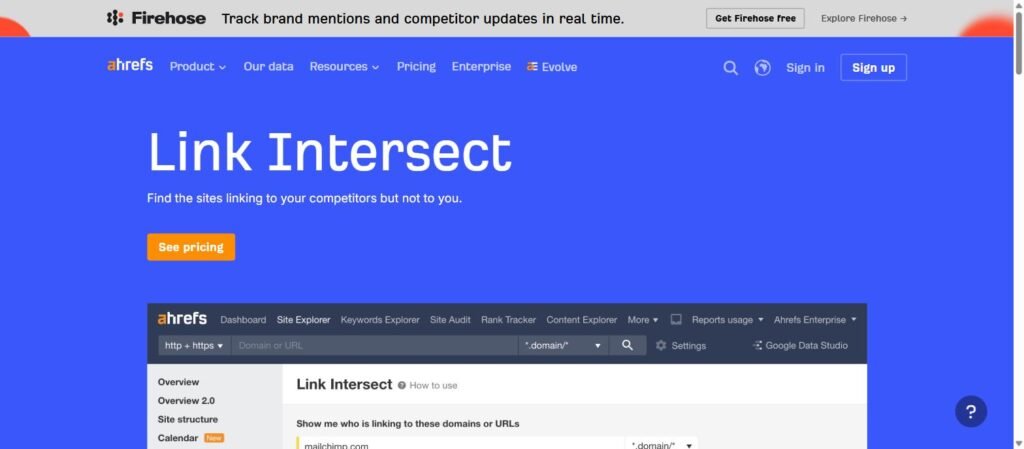
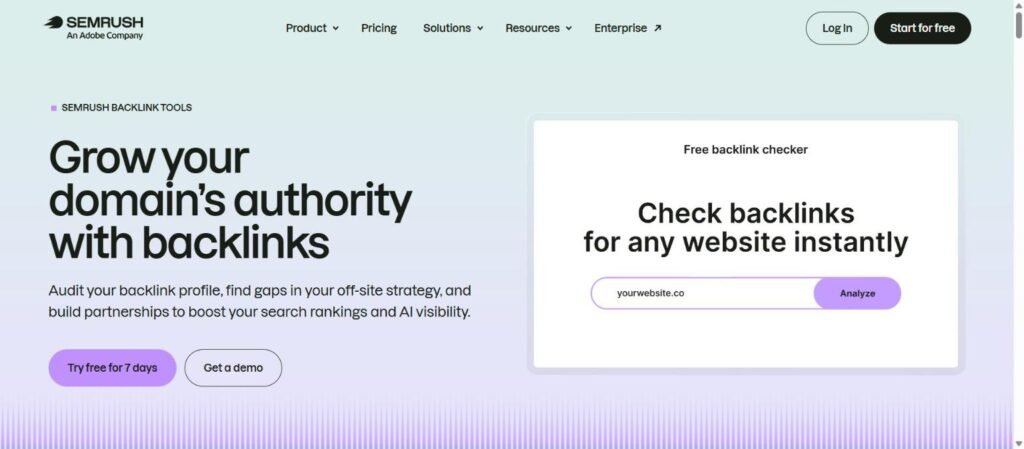
In Ahrefs, open Competitive Analysis, enter your domain as the target and your competitors alongside it, and choose Referring domains. Set it to show domains linking to at least two competitors and not to you. In Semrush, the Backlink Gap tool does the same job: enter up to five domains and filter to the Weak or Untapped views. If you are working without a paid tool, Moz Link Explorer’s free tier, Ubersuggest and the free version of Ahrefs Webmaster Tools for your own site will get you a smaller but usable list; export each competitor’s referring domains and compare them in a spreadsheet with a simple COUNTIF.
Step 3: Filter ruthlessly
The raw export will contain hundreds of domains and most of them are useless. Filter in this order:
- Remove junk. Scrapers, spam directories, expired domains, forum profile pages and anything with zero organic traffic.
- Keep only relevant sites. If the domain would not make sense on a “as featured in” list for your business, drop it.
- Prioritise domains linking to two or more competitors. They have shown a pattern, not a one-off.
- Check the linking page, not just the domain. A DR 70 site that linked to a competitor from a 2016 press release is not the same as one linking from a live resource page.
- Sort by how they linked. Resource page, guest article, directory listing, interview, tool roundup, sponsorship. The link type tells you how to get yours.
When you are done, a list of 300 becomes 20 to 40 real opportunities. That is the list you work.
Step 4: Match each opportunity to a tactic
| How they linked to your competitor | How you get the same link |
|---|---|
| Resource or “useful links” page | Email the page owner with your equivalent (better) resource |
| Guest article by the competitor | Pitch your own guest post on a fresh angle |
| Mentioned in an existing article | Ask for a link insertion where you add something the article lacks |
| Industry directory or association | Get listed. Usually a form and sometimes a fee |
| Interview, podcast or expert roundup | Pitch yourself as a source with a specific angle |
| Linked to their original data or tool | Create something better or more current, then tell everyone who linked to theirs |
Step 5: Prioritise and work the list
Score each opportunity on relevance, the linking page’s traffic, and how realistic it is to get. Work the easy, relevant wins first: directories, resource pages and reclaiming mentions. Then move to the outreach-heavy ones. Track everything in a sheet with a status column, and re-run the gap analysis every quarter, because your competitors keep building links and the gap keeps shifting.
Mistakes that waste the analysis
- Copying every competitor link, including the toxic ones. If they bought links from a network, you do not want to match that.
- Chasing domains instead of pages. The page and its context decide what a link is worth.
- Ignoring what you are pointing the links at. A strong link into a page with weak on-page SEO underperforms every time.
- Treating it as a one-time exercise. The competitors who beat you are doing this quarterly.
Frequently asked questions about backlink gap analysis
How many competitors should I include?
Three to five, all of a similar size to you and all actually ranking for your target keywords. More than that and the overlap becomes noise.
Can I do a backlink gap analysis for free?
Yes, with more manual work. Moz Link Explorer’s free queries, Ubersuggest and Ahrefs Webmaster Tools for your own domain, plus a spreadsheet to compare exports, will get you a usable list. A paid tool saves hours and finds more.
Should I try to get every link my competitors have?
No. Aim to close the gap in quality and relevance, not raw count. Twenty relevant links from your filtered list will outperform two hundred copied blindly.
How often should I repeat it?
Quarterly for most sites, monthly if you are in a fast-moving or highly competitive niche.
What is the difference between a backlink gap and a content gap?
A backlink gap shows where competitors get links that you do not. A content gap shows keywords they rank for that you do not. Run both: the content gap tells you what to create, and the backlink gap tells you who to ask to link to it.
New to pulling link data? Read how to check backlinks first, then come back and run the gap comparison.
Next step
Pick your three closest search competitors, run the gap report, and filter it down to twenty domains that link to at least two of them. Then match each one to a tactic from the table above and start with the easiest five this week. If you would rather have the analysis, the outreach and the rest of your off-page SEO handled, have a look at my SEO services or get in touch.